

EVFX-7 Remora: The Threat You Didn’t See Coming
In Flight Test | IOC September 2026
Remora replicates the deployment dimension of modern UAS threats — air-launched from a carrier platform, vertically deployed as a tail-sitter, or hand-launched into the engagement area. The threat didn’t come from where your operators were looking. Neither does Remora.
The Training Problem
The Threat Doesn’t Always Come From the Ground
Every other aerial target in counter-UAS training has a predictable origin: a ground launch point, a known release location, a flight path your sensors can anticipate. Modern adversaries have already moved past that. Drones are being released from aircraft, deployed from vehicles in transit, and hand-launched from positions inside the defended perimeter.
Training exclusively against ground-origin threats produces operators who are proficient against the attack vector they’ve prepared for — and surprised by everything else. Remora trains for everything else.
What Remors Is
Three Deployment Modes. One System. Infinite Scenarios.
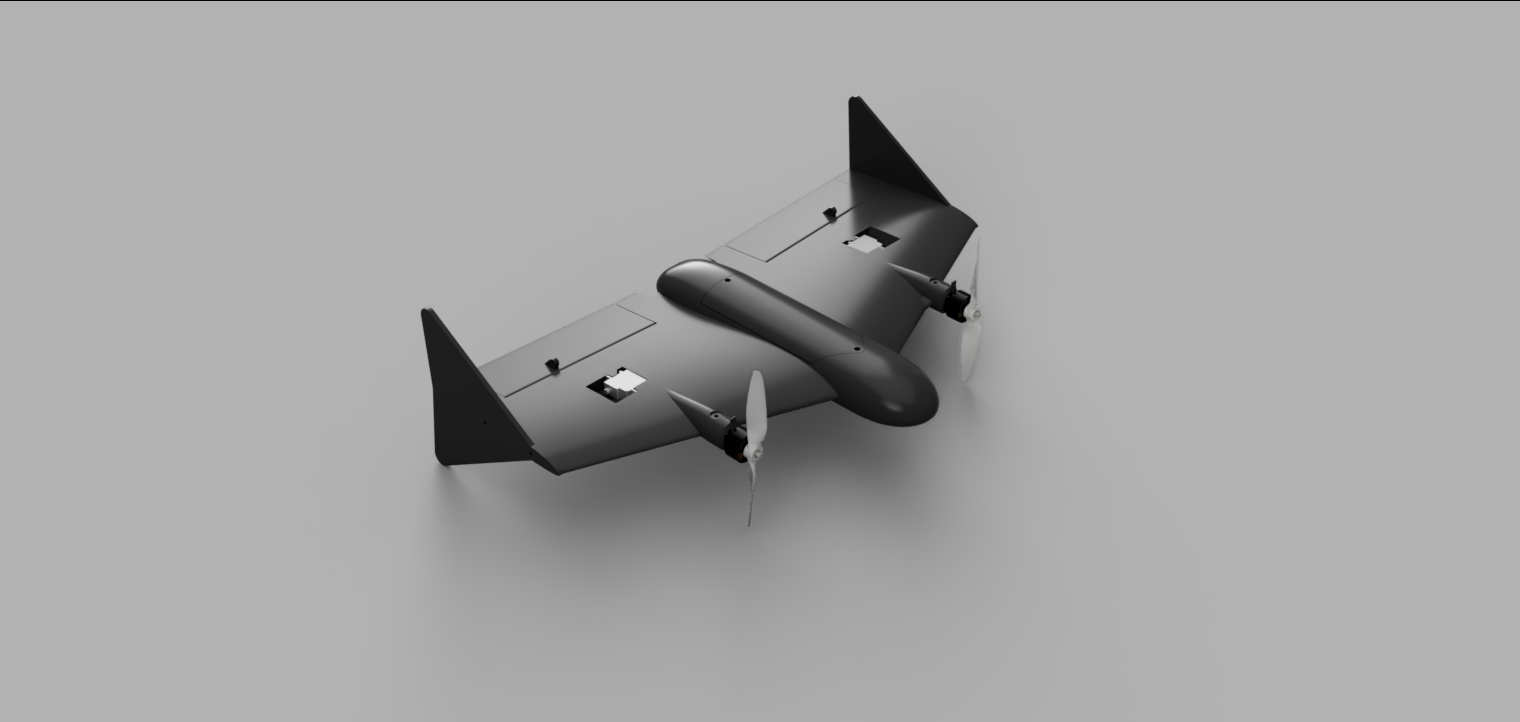
The EVFX-5 Remora is a fixed-wing electric aerial target engineered for multi-modal deployment — the only system in the ABSI portfolio capable of air-launch from a carrier platform, vertical tail-sitter ground launch without additional launch infrastructure, and hand deployment. Each mode represents a distinct threat origin that C-UAS operators must be prepared to detect and engage. A single carrier platform deploying multiple Remoras introduces threat multiplication: one aircraft, multiple threats, from an origin point that ground-based systems weren’t watching.
Remora supports loiter-to-strike and terminal dive profiles following deployment, covering the full multi-stage engagement sequence from carrier release through terminal attack. Unlike traditional targets limited to single-origin launch, Remora replicates how advanced adversaries are actually delivering UAS threats today — and how that problem is compounding.
NDAA-compliant variants will integrate ABSI’s own U.S.-manufactured flight controller from the outset — no legacy avionics to transition upon production release. Remaining avionics components are sourced from NDAA-compliant supply chains, with a full ABSI-developed avionics stack on the roadmap.
Key Capabilities
-
Three Deployment Modes
Air-launched from a carrier platform, vertically deployed as a tail-sitter without launch infrastructure, or hand-launched. Each mode replicates a distinct threat origin that ground-origin targets cannot address.
-
Threat Multiplication
One carrier platform, multiple Remora deployments. The engagement problem multiplies; the origin doesn’t change. Forces multi-target decision-making from a single airborne vector.
-
Multi-Stage Engagement Sequence
Replicates the full deployment-to-strike sequence: carrier release or ground launch, transition to forward flight, loiter or approach, and terminal dive/strike — training operators against a threat that evolves across multiple phases.
-
Unpredictable Threat Origin
Forces operators to detect, classify, and engage threats that do not originate from expected ground launch points — stress-testing detection assumptions and engagement workflows built around predictable threat vectors.
-
Two Procurement Configurations
Available in NDAA-compliant variant for standard DoD procurement, and C-UAS training-optimized variant under the Section 817 FY2023 NDAA exemption — for maximum threat fidelity.
System Specifications
| Airframe Type | Fixed-wing electric — tail-sitter capable; transitions from vertical launch to forward flight |
| Deployment Modes | Air-launch (carrier platform), vertical tail-sitter ground launch, hand launch |
| Threat Replication | Air-launched effects (ALE), multi-stage deployment, distributed multi-vector attack scenarios |
| Flight Profile | Transition flight stability from launch through forward flight; loiter-to-strike and terminal dive profiles |
| Carrier Integration | Designed for integration with aerial carrier platforms enabling threat multiplication from airborne origin |
| Design Philosophy | Primarily attritable — optimized for expendable kinetic use; reuse supported where mission allows |
| Payload | Modular — instrumentation, telemetry, and mission-specific payloads |
| Flight Controller | ABSI-designed, U.S.-manufactured — integrated from the outset. No legacy avionics to transition. |
| Other Avionics | ESCs and GPS sourced from NDAA-compliant supply chains. Full ABSI avionics stack on the roadmap. |
| NDAA-Compliant Variant | Supply chain validated for NDAA compliance. Standard DoD procurement — no exception-to-policy required. |
| C-UAS Training Variant | Authentic adversary component set. Procured under Section 817, FY2023 NDAA exemption. |
| IOC | September 2026 — currently in flight test. Engage now for mission requirements and early access. |
Detailed performance parameters, system configurations, carrier integration pathways, and deployment options are available upon request. Contact our team to discuss how Remora can support your ALE training and distributed multi-stage threat requirements.
Use Cases - Applications
Primary
-
Air-launched effects (ALE) training and evaluation from carrier platforms
-
Multi-stage drone threat replication across deployment, transition, and terminal engagement phases
-
Distributed and multi-vector attack training against threats from unpredictable origins
-
Live-fire engagement against deployable, air-launched aerial threats
Secondary
-
Advanced TTP development for distributed and carrier-based threat environments
-
Multi-system coordinated scenarios within ABSI GCS ecosystem
-
Carrier platform integration and ALE deployment concept validation
ABSI Aerial Targets Ecosystem
One control system. Every threat class. Seamless training at scale.
Remora is the air-launched and multi-stage deployment layer within the ABSI aerial target ecosystem — adding the dimension no other system addresses: where the threat comes from, not just what it does. Within the common GCS architecture, Remora’s carrier-deployed threats can be layered into coordinated multi-threat scenarios alongside Gnat Storm’s swarm density, Desert Lance’s Shahed-101 class loitering munition profiles, and Pit Viper’s high-speed tactical threat — replicating how adversaries combine delivery methods and threat types in operational employment.
Acquisition Pathway
In Flight Test. IOC September 2026. Engage Now.
Remora is in flight test with initial operational capability anticipated September 2026. The system will be available through the Defense Logistics Agency’s Special Operational Equipment Tailored Logistic Support (DLA SOE/TLS) program and direct contracting pathways. Development timelines are adaptable to support accelerated mission-driven requirements.
Both NDAA-compliant and C-UAS training-optimized configurations will be available. Program offices should engage now to discuss carrier integration requirements, mission configurations, and early access.
Not sure which configuration fits your program? The C-UAS training-optimized variant is available under Section 817 of the FY2023 NDAA — a statutory exemption that gives counter-UAS training programs explicit authority to procure authentic adversary component systems without standard NDAA supply chain restrictions. Contact ABSI and we’ll walk your team through the pathway.

Deploy the Threat. Multiply the Scenario.
Remora delivers the deployment dimension of modern UAS threats — air-launched, vertically deployed, or hand-launched, across all three modes your operators need to train against. IOC September 2026. Engage now.